If you run an HVAC company, you already know the problem: your phone rings at 2 a.m., and nobody answers. The homeowner calls your competitor instead. That job, worth anywhere from $300 to $2,000, is gone before you even wake up.
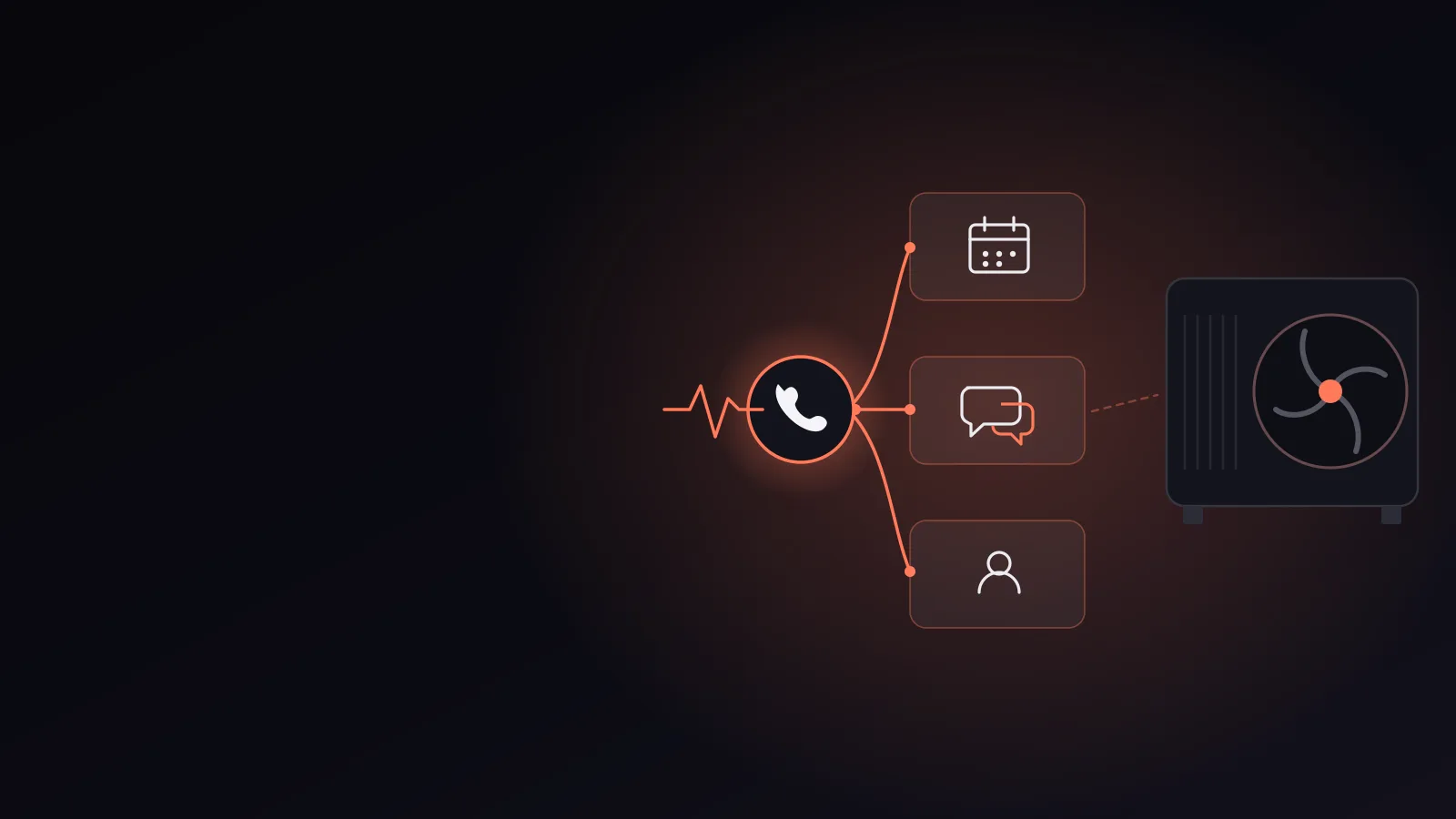
An AI receptionist for HVAC fixes this. It answers every call on the first ring, 24 hours a day, triages the urgency, and books the job into your calendar. No hold music. No voicemail. No missed jobs.
This guide covers what to look for in an AI receptionist for HVAC companies, what the best options actually do, and why getting this right is one of the highest-ROI decisions you can make for your business.
Why HVAC Companies Lose More Revenue to Missed Calls Than Any Other Trade
HVAC is unique among home service industries because demand is intensely seasonal and emergency-driven. When a furnace dies in January or an AC unit fails in August, homeowners do not wait. They call the first company that picks up.
Research consistently shows that over 80% of HVAC emergency calls happen outside standard business hours. That means evenings, weekends, and public holidays, exactly when most HVAC offices are unmanned or redirecting to voicemail.
The cost adds up fast. A single missed emergency call is typically worth $500-$2,500 in revenue. For a 3-truck operation missing just 5 after-hours calls per week, that is $130,000-$650,000 in lost revenue per year. Most HVAC owners significantly underestimate this number because missed calls never show up in their CRM.
What to Look for in an AI Receptionist for HVAC
Not all AI receptionists are built the same. For HVAC specifically, you need a solution that can handle the complexity of your calls, not just take a message.
Emergency triage capability
HVAC calls range from “my AC is making a noise” to “no heat, two kids, it is 8°F outside.” Your AI receptionist needs to ask the right diagnostic questions about fuel type, symptoms, and whether there is smoke or a gas smell, then route the call appropriately. A generic answering service cannot do this.
Booking straight into your schedule
The whole point of an AI receptionist is that it books jobs, not just takes messages. Ask each vendor exactly where a booking lands: your calendar, your field service software, or an email someone has to re-type. If you run ServiceTitan or Housecall Pro, ask whether the vendor writes to it directly or only sends a notification, and get the answer in writing.
After-hours handling
Your AI receptionist should handle after-hours calls differently from business-hours calls. Emergency calls at 11 p.m. should trigger your on-call tech via SMS. Routine calls should be booked into the next available slot the following morning. A good system lets you configure this logic without touching code.
Natural voice quality
HVAC callers are often stressed, especially during emergencies. If your AI receptionist sounds stiff or reads from a script, callers will hang up. Look for sub-300ms response latency and natural conversational flow. The caller should feel like they are talking to a competent human dispatcher.
Voice Intego: Built Specifically for HVAC Companies
Voice Intego was designed from the ground up for service businesses like HVAC companies, not retrofitted from a generic call centre tool.
When a call comes in, Voice Intego greets the caller, asks the diagnostic questions you would ask (fuel type, system age, visible symptoms), works out how urgent it is, and books the job into your calendar, all before you have had a chance to check your phone.
For emergency calls after hours, it follows the emergency call flow you agree with us, such as transferring the caller to your on-call tech. For routine calls, it checks your live calendar and books an open slot.
The result is that the calls you were losing after 5 p.m. turn into booked jobs on the next morning’s schedule, instead of voicemails nobody returns.
What the First 30 Days Look Like
Here is how a rollout is normally structured:
- Week 1: After-hours calls that previously went to voicemail start booking automatically. This is usually the first change you notice.
- Week 2-3: The AI handles price-shopping calls by collecting job details and booking free estimates, rather than losing the lead to a competitor who answers faster.
- Month 1: You have a full month of call data. Every call is transcribed and tagged, so you can see how many callers asked about what, how many booked, and where you are still losing people.
We would rather show you than tell you. Book a demo and hear the agent handle a real HVAC call before you take our word for any of it.
How to Get Started with an AI Receptionist for Your HVAC Business
Getting an AI receptionist live for your HVAC company does not require replacing your current systems. Voice Intego connects to Google Calendar, Outlook or Cal.com on every plan, and the Professional plan adds CRM connections. Custom integrations and API access come with the multi-location plan. Standard setups go live in 7 days.
The onboarding process works like this:
- Discovery call (20 min): We map your call types, urgency tiers, tech zones, and dispatch logic.
- Build and QA (3-5 days): We build your agent, train it on your service menu and pricing, and run test calls.
- Go live: Your number forwards to Voice Intego and the agent starts taking calls.
There is no long-term contract. A one-time onboarding fee covers script writing, calendar setup and pre-launch testing, and it is waived if you pay annually. You can cancel anytime from your billing portal.
Ready to stop missing after-hours HVAC calls? Book a free 20-minute demo and hear your AI receptionist handle a real HVAC call, built around your service menu and booking flow.